Smoke residue behaves differently depending on combustion temperature, airflow, and fuel composition. High-temperature structural fires leave dry, powdery soot that yields to dry chem-sponges, whereas low-oxygen,…
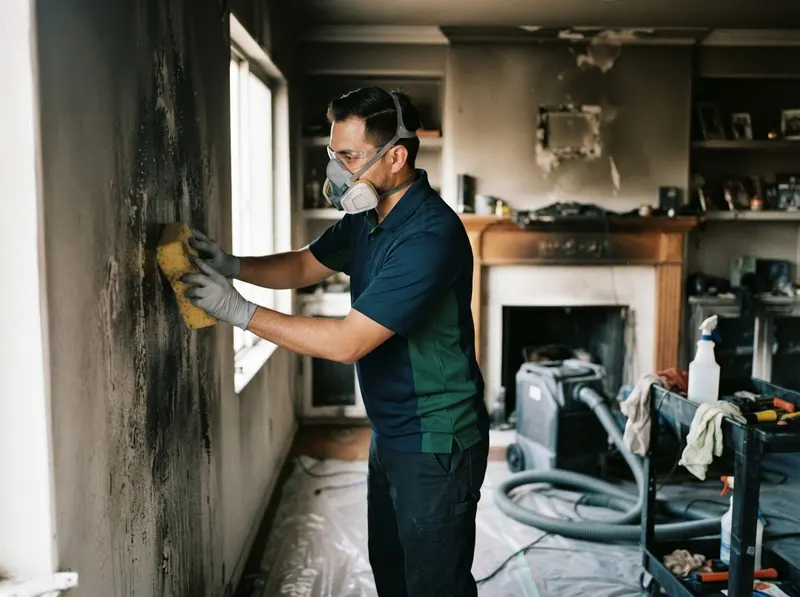
Smoke residue behaves differently depending on combustion temperature, airflow, and fuel composition. High-temperature structural fires leave dry, powdery soot that yields to dry chem-sponges, whereas low-oxygen, smoldering protein fires produce an oily, yellow-brown film that coats surfaces and permanently discolors synthetic latex paints if left untreated past 48 hours. In hillside microclimates near Pacific Palisades, Brentwood, and the Hollywood Hills, marine air and canyon drafts accelerate the penetration of acidic soot into porous drywall, lath-and-plaster, and framing timber. Decontamination requires neutralizing these corrosive compounds before they pit finished metals, etch window glass, or permanently stain architectural surfaces.
Soot removal must precede air neutralization; attempting to mask smoke odor without first cleaning the physical soot layer results in failure. Crews apply mechanical particulate extraction using DOP-tested HEPA vacuums capturing particles down to 0.3 microns, followed by vulcanized natural rubber sponges that absorb dry soot without smearing. In neighborhoods like Silver Lake, Echo Park, and Los Feliz, older residential architecture frequently incorporates multi-layer lath-and-plaster walls and original unsealed hardwood. These substrates demand non-aqueous solvent degreasers to extract oily soot without raising wood grain or dissolving heritage plaster binders. Wet cleaning solutions applied prematurely drive carbon particles deeper into unfinished surfaces, turning a restorable finish into an unrepairable structural loss.
Deep-set smoke odor mitigation relies on matching the molecular size of neutralizing agents to the combustion gas particles trapped in porous materials. Hydroxyl generators treat occupied spaces safely during active restoration, breaking volatile organic compounds (VOCs) apart at the molecular level through continuous ambient air circulation. For severe losses across Encino, Sherman Oaks, and Woodland Hills, sealed unoccupied containment zones allow commercial thermal fogging, which vaporizes solvent-based deodorizers to follow the identical thermal drift pathways taken by structural smoke during the fire. Duct networks undergo mechanical brushing under negative pressure, paired with hospital-grade antimicrobial coatings to guarantee air supplies do not re-contaminate newly sanitized living areas.
Navigating insurance claims after fire incidents in Los Angeles County requires strict documentation using Xactimate pricing standards. Certified technicians perform surface-swab tests and particle counter readings before and after treatment to produce an audit-ready scope of loss for field adjusters, preventing disputes over unauthorized repairs. Homeowners seeking stabilization avoid out-of-pocket delays by securing immediate direct-to-carrier structural mitigation agreements, ensuring technical containment begins before soot-derived sulfur dioxide reacts with atmospheric moisture to form destructive sulfurous acid.
Every job gets a firm, written price after a free on-site visit.
Tell us about your smoke odor and soot decontamination job in los angeles and we'll send a clear, written quote, usually the same day.
 Elite Fire Damage Restoration