Garage fires generate distinct chemical hazards because passenger vehicles contain dense synthetic compounds, petroleum derivatives, and high-voltage energy storage systems. When an automobile ignites inside an…
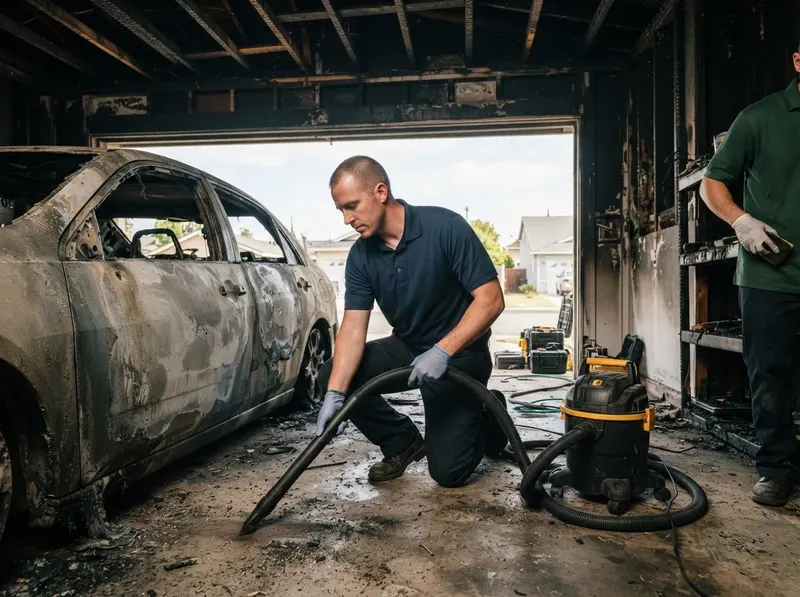
Garage fires generate distinct chemical hazards because passenger vehicles contain dense synthetic compounds, petroleum derivatives, and high-voltage energy storage systems. When an automobile ignites inside an enclosed garage in Sherman Oaks or Encino, temperatures exceed 1,500 degrees Fahrenheit within minutes. This heat bakes acidic chemical soot directly into surrounding concrete slab foundations, structural two-by-six ceiling joists, and shared living-space drywall. Standard fire recovery workflows cannot process these incidents without dedicated hazardous material remediation protocols. Technicians neutralize sulfuric battery acids, safely clear ruptured engine blocks, and extract melted hydrocarbon polymers before structural framing assessment begins.
Contaminated air path migration presents a critical risk to attached residential units, particularly in multi-level properties along steep grades in Silver Lake, Los Feliz, or the Hollywood Hills. Toxic volatile organic compounds (VOCs) and petroleum-based particulate matter bypass closed interior pass-through doors, entering centralized HVAC ducts and attic voids. Containment requires installing 6-mil polyethylene isolation chambers held under negative pressure using 2,000-CFM industrial HEPA air filtration units. Technicians systematically discard charred residential contents, extract compromised fire-rated drywall, and strip charred timber using dry ice blasting methods to preserve foundational framing before municipal safety inspections.
Executing clearout operations on hillside access roads requires specific logistical workflows. Narrow transit corridors in Pacific Palisades or Echo Park restrict multi-ton debris haulers, necessitating localized bin placement or smaller flatbed extraction shuttles. In suburban locations like Woodland Hills, Brentwood, or Boyle Heights, properties face alternate exposure variables: expansive detached workshop layouts require localized structural shoring to prevent catastrophic roof trusses collapsing onto vehicles. When structural stability is compromised, technicians install temporary pneumatic steel jacks and load-bearing timber walls before personnel begin manual contents cataloging for property insurance adjusters.
Insurance billing workflows for vehicle-involved garage fires involve cross-carrier processing between California auto liability lines and residential hazard policies. Structural mitigation teams document debris line by line using photographic dry-ice extraction audits, concrete slab penetration cores, and moisture maps resulting from local fire department hose streams. Structural drying protocols proceed immediately alongside clearout to halt microbial growth within wet exterior walls, stabilizing the footprint entirely before reconstruction handoff.
Every job gets a firm, written price after a free on-site visit.
Tell us about your garage and vehicle fire clearout job in los angeles and we'll send a clear, written quote, usually the same day.
 Elite Fire Damage Restoration